Wednesday, August 1, 2012

The tragic story of expat Alice versus the US

The following story is true. I have verified this information, but cannot tell you how. I know that sounds strange, but I don't want this person to be hurt. Even a little digging into the following story will reveal many other US expats in the same predicament. Further, I've altered some key details to protect the identity of the innocent.

Justice is blind
Blind Justice
Photo by Shawn Rossi
There's an expat I'm calling "Alice". Alice is an American who moved to Europe 40 years ago. Like most expats, she had no idea that she was required to pay taxes back to the US government. She's regularly renewed her passport and had a couple of trips to the US, but aside from that, she's drawn no benefits from the US government and has never lived in the US or worked for a US company since she left. Aside from the fact that she still has her US citizenship and never taken European citizenship, she is, for all intents and purposes, a European.

She's happy in Europe. She has friends and family here. She has permanent residency, but one thing she doesn't have is a job. Most of her life she didn't make huge amounts of money, but in the last few years, she had a job that paid her well. She used this to save up a small nest egg for retirement.

Then her company laid her off. Due to the recession, they couldn't afford to keep her and she's old enough now that she can't find work. She gave in and declared herself a pensioner and now draws a small pension from the country she lives in, supplemented by her savings. Thanks to FATCA and the recent IRS crackdown on US expats, she is now aware of her obligation to file tax returns, but she's stuck. She can't file because FATCA and FBAR penalties will bankrupt her, but due to FATCA, she's terrified that the country she's lived in for decades might turn her in.

She's going to be a criminal, bankrupt, and quite possibly homeless, even though only in the past few years did she earn enough to owe tax to the US government. If she gets a criminal conviction, she might even find herself deported to the US, a country she no longer knows, where she no longer has friends and only a couple of family members left.

Alice did nothing wrong, but the US is hunting her down and is going to destroy her. She has lived the vast majority of her life in Europe and almost all of her working life in Europe. The US doesn't know about her yet, but there's a good chance they will.

Is this fair? Is this what a free society does to its citizens?

Tuesday, July 31, 2012

Germany: Blue Card Applications Now Being Accepted

Frankfurt, Germany skyline
Frankfurt, Germany
Photo by Jens Meyer
Just a quick note: Germany: Blue Card Applications Now Being Accepted. I have written about the German Blue Card when it was announced, but now it's for real. Get a job offer, apply for the card and you're in!

Particularly for you high-tech types, Germany is very attractive and its economy is still going very strong.

Also, I've just started a Google+ Page for Overseas Exile. If you're on Google+, follow the page!

Monday, July 30, 2012

July 2012 quarterly list of US renunciants

The quarterly list of US renunciants has been published for July, 2012 (pdf, xml). I am highly suspicious of this list. First, only 189 people were reported as having renounced and this is one of the lowest numbers in years (it should have been at least twice this number). Given that people are saying they've renounced and their name is not showing up on the list and others reporting long waiting lists to get a renunciation appointment, I simply don't find this list very credible. I also wonder about "John Joseph Bentley" and "John J. Bentley", both of who are reported to have renounced.

I don't know if this is deliberate political tampering with this list or if it's just inefficient bureaucracy, but I find it highly unlikely there are only 189 renunciations (unless people have wised up and started relinquishing their citizenship instead of renouncing, thereby skipping this list).

My software has flagged several interesting names and I'm sending emails to people to verify (I won't report results unless they give me permission). Others, such as Chris Moonkey Nam are already known to have renounced their citizenship.

As an interesting side note: I was thinking about how many Republicans wanting to define life as beginning at conception. Since the US recognizes jus soli, are they going to start screaming about "anchor embryos"? Tourists visiting the US for their honeymoon could conceive on US soil and conceivably (hah!) give birth to US citizens in their home countries.

Friday, July 27, 2012

Must you tolerate another culture?

Eric Raymond related an interesting historical tidbit from Britian's colonization of India.

In the 1840s, Sir Charles Napier was the commander of the British forces in India. Hindu priests approached him, upset that they were no longer allowed to burn widows alive on their husband's funeral pyres, a practice known as suttee or sati. Sir Napier responded:
Be it so. This burning of widows is your custom; prepare the funeral pile. But my nation has also a custom. When men burn women alive we hang them, and confiscate all their property. My carpenters shall therefore erect gibbets on which to hang all concerned when the widow is consumed. Let us all act according to national customs.
This incident is related in the History of General Sir Charles Napier's Administration of the Scinde¹ (the book is now in the public domain and can be downloaded as an ebook).

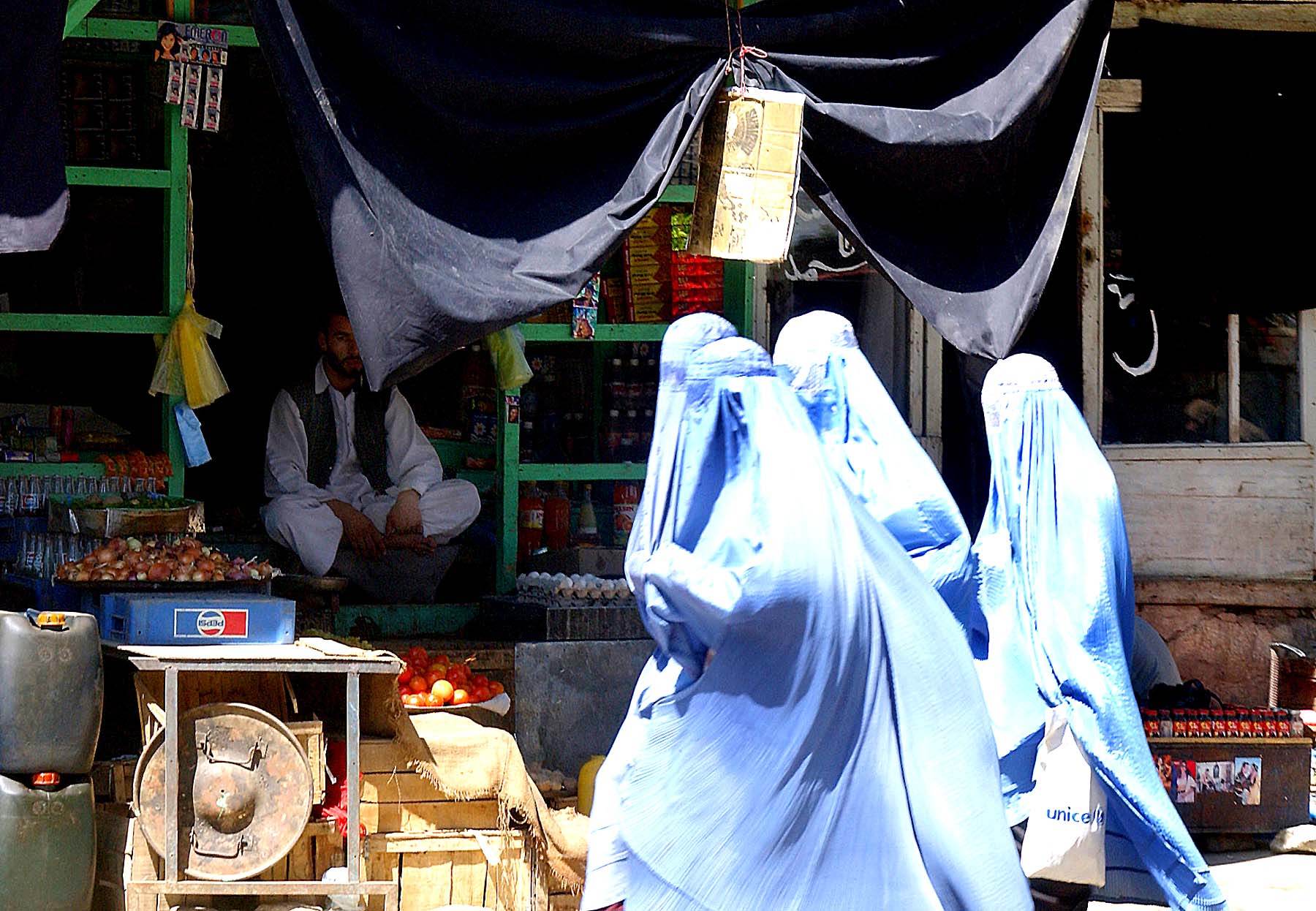
Women in Afghanistan wearing a burka
Cultural differences or oppression?
Photo Wikimedia Commons
Or consider the famous case of the Etoro tribe of new Guinea. Young boys (as young as 12) must perform oral sex on the older men of the tribe to receive the "gift of semen". This gift allows them to grow up to be strong men.

Now think about examples closer to home. Saudi Arabia denies women the right to travel, study, or work without permission of a male guardian. Gay rights are non-existent in Saudi Arabia and churches are not allowed because freedom of religion is not tolerated. In Niger, though slavery is still technically illegal, it's still practiced openly. Iran still puts people to death for being gay.

Regarding Eric Raymond's posting of the interesting story of the Hindu priests, I think we can all agree that Napier's response was brilliant, but it also shows the absurdity of too much multiculturalism. While I strongly support multiculturalism, there does come a point where we have to draw a line in the sand and say "enough!" There are limits to tolerance. Even if you were open-minded enough to dwell among the Etoro and and accept their culture, how would you feel if you were presented a little boy and told to give him the gift of semen?

Yeah, that's what I thought. It's OK  to say "I can't do this." That's not too far removed from "I can't support this."

But where do you draw the line? I can't tell you that because it's different for every person, but I can tell you one thing: cultures matter more than even the most tolerant of us would think. Specifically, the further a culture is from your own, the more likely it is that you will not succeed as an expat. If you want your dream of living abroad in another country to live, then you will need to research carefully if you get a dream opportunity in a place you've never heard of. Some expats discover that merely having too much bureaucracy is enough for them to hate a country. Discovering that you will be served bugs for dinner might be too much.

I suspect this is why almost 40% of respondents to my last expat survey said they wanted to move to Europe.

Update: Simon Cozens is a missionary in Japan and he recently made an excellent blog post about his cultural experience there. Very relevant!


1. Sinde, in this case, appears to refer to Sindh, one of the four modern-day provinces of Pakistan.

Wednesday, July 25, 2012

Accustomed to life in Denmark

Today's guess post comes from Tess Pajaron, who shares her experience in Denmark. I've written a bit about the Danish Green Card and having been to Copenhagen twice, I can tell you it's lovely. That being said, Tess doesn't touch on the cost of living there, which is quite high.

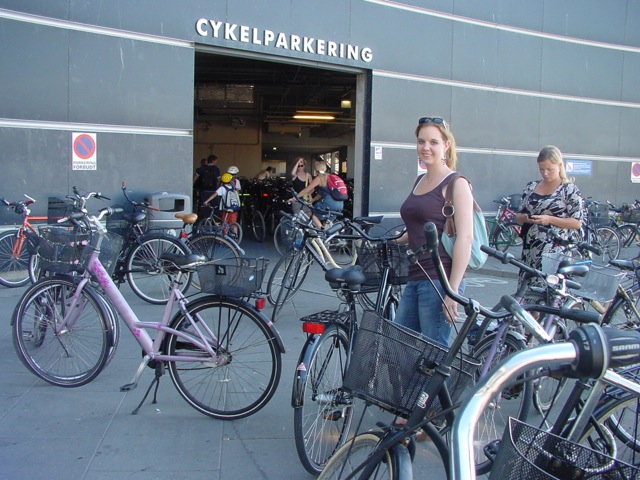
The photos are from Tess's personal collection and are used with her permission.


ACCUSTOMED TO LIFE IN DENMARK

When I was younger, like many of you, I dreamt of moving overseas one day. I had traveled the world with my family, seen the diversity and fell instantly in love. So to move to a new location where I would be surrounded by new experiences, new cultures, and of course a new language, seemed like nothing but a thrill to me.

My last year of University, I finished out my studies in Marketing and International Business at the Copenhagen Business School. Here, I lived with a host family and found myself a Danish boyfriend which allowed me to become full immersed in the culture of this incredible country. In fact, I loved it so much that I found a job and was hired to do international marketing at a Danish firm specifically to the American market. For just over a total of three years I lived in the capital of this incredible country and found my way in a unique but wonderful culture.

If you have ever dreamt of moving to Scandinavia, there are some important things to know about the country to help you get accustomed to life in Denmark.

Get a Bike


In Denmark, bikes are used far more than cars. In fact, the center of the capital of the country closes down on some days to car traffic and only bikes or pedestrians are allowed. Denmark is also home to the world’s longest walking street. The Danes value the non-motorized modes of transportation and with everything so close by getting around is usually not a problem. Public transportation is also superb in this country so you should have no problem getting to anywhere that is a bit further than a bike ride away.

If you cannot afford a bike at first, city bikes are available for free. Simply find a rack (they’re all over the city) and place your 20 kroner coin in the slot. This will free the bike. Once you have finished riding, return the bike to any location and you will get your 20 kroner coin back. The country values bike riding and has developed wide bike lanes to help people get around in this popular mode of transportation.

Learn the Language

The Danes have admitted that it is often times very difficult for them to make new friends. Because the culture in this small country of only 5 million is so tightly knit, there is somewhat of uneasiness among befriending foreigners. In my experience, this uneasiness was easy to overcome in just a few ways.

  • Learn the language
  • Show them you are learning the language
  • Use language to get more involved with their culture

Understandably no one wants a foreigner coming in and changing their country to their ideals and ignore the rich history this region has to offer. Their language is very important to them and is closely tied to their culture. If you make no effort to learn the language and expect that just because the vast majority of the country speaks English you won’t have to learn, you are very wrong.

Learning the language shows a respect for the Danish culture and will quickly drop any walls of fear held by Danes allowing you to become closer to them in immerse yourself better in their culture.
For foreigners, a free language course is offered through something called Studieskolen. This is a great place to start and allows you to meet other expats, as well as Danes who have an interest in helping others learn about their great country.

Be aware of potential visa challenges

This country has been said to be one of the hardest to get into in the world, and from my experience that is true.

In the 1970’s, this socialist country opened up their doors and gave anybody who wanted a new home a place to live. This led to many people coming from poorer countries and living off the generosity of the government without integrating into the culture or learning the language – yet another reason why a foreigner learning Danish is so important. This quickly caused the government to close their doors and while they are slowly loosening the reins on who they will allow in, it is not easy.

Hygge

This singular term is the best way for any expat to fully understand the Danish culture. It is a non-translatable word, but most closely it means ‘Cozy’. Danes love their time spent with friends and family. They eat dinner for hours at a time without a rush to the television set (except when there is a big soccer game). They get together and have a ‘hyggeligt’ time together. The sooner any expat fully learns what this feels like, and any Dane will be glad to help with that, the sooner they will feel accustomed to life in Denmark.

Tess Pajaron is part of the team behind Open Colleges. She has traveled to many different countries and loves to explore various cultures and histories. She can be also seen on her social media profile at Google+.

Tuesday, July 24, 2012

What it's like to be an American in China


I listened to this at lunch today and it was fantastic. It also makes me curious about moving to China for a while. I suspect my wife would be less than thrilled, though.

So why should you listen to it? Well, if you're an American, there's a damned good chance that you have as little knowledge of China as most Chinese have of America. This is a great opportunity to try and understand, just a little bit, what it's like to live in a truly foreign country.

Monday, July 23, 2012

A Walk Through Paris

At two million people, Paris isn't really a terribly large city. Of course, it's over 12 million when you count the metropolitan area, but inside the Boulevard Périphérique (the road around the city), it's small. That being said, when I say "small" I mean "I lived in London for years", so your mileage may vary.

We live in Les Lilas, on the north east border of Paris and almost every day I walk to work. I'm fortunate that it only takes half an hour and I like to vary my route to see a bit more. On Friday I veered north a bit, smack dab in the middle of the 19th arrondisdement, yet still in Belleville. Up until the mid 1800s, Belleville was still an independent commune in France, but was eventually annexed by Paris. It has a long history of being a rich mix of different cultures and is the home of Édith Piaf (who?).

I took a few pictures along the way. I think they're lovely and show off some of the charm in Belleville, a charm that is largely missing from much of Paris.

You can click on the pictures to see larger versions.


Interestingly, I can't really remember if these are really that different from US buildings. I only left the US six years ago, but it seems a lifetime ago.

And finally, our friends David and Julie have been visiting from the US. David took a picture of my daughter at the park.